
açaí
What Is Açaí, Actually? An Honest Founder's Primer
Wondering what açaí actually is? The founder of Bonita Bowls breaks down the berry, the pronunciation, the health claims, and why it matters.
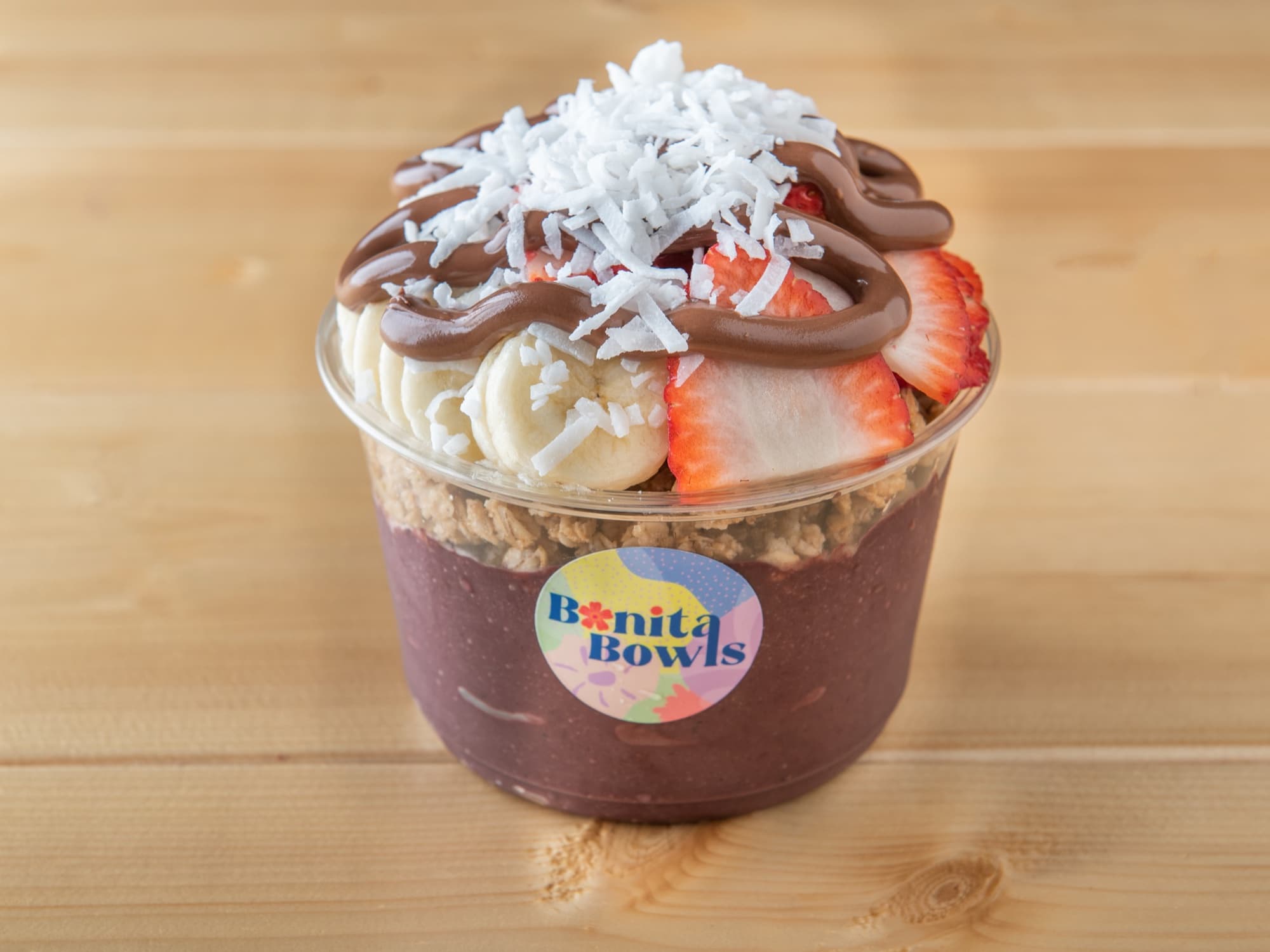
Here's a question I get more than any other, multiple times a week, from customers, friends, investors, and once from a podcast host who'd been eating açaí for two years:
“What is açaí, actually?”
Fair question. Honest answer: most people who order it don't know. They know it's purple. They know it's supposed to be healthy. They know it shows up in Instagram bowls topped with granola and strawberries. Beyond that? Mystery.
So let me clear it up — straight, no hype.
The two-sentence answer
Açaí is a small dark purple berry that grows on the açaí palm in the Brazilian Amazon. It's nutrient-dense, lightly sweet but earthy, and almost always served frozen because it oxidizes within 36 hours of harvest.
That's the whole story in two sentences. The rest of this post is the context that explains why those two sentences matter — and why the bowl you eat at one shop can taste nothing like the bowl you eat at another.
How do you pronounce açaí?
Ah-sigh-EE.Three syllables. The accent goes on the last one. In Portuguese, the cedilla under the C makes it sound like an “s,” and the í has an accent because the i is its own syllable, separated from the a.
Most first-timers say “ack-eye” or “ah-kai” and feel weird about it the rest of the day. No shame — Portuguese pronunciation is its own thing. But if you want to walk into any Brazilian café and order it like you've been there before: ah-sigh-EE.
Where does açaí come from?
Açaí grows on a slim, sky-tall palm tree (Euterpe oleracea) native to the flooded river plains of northern Brazil, especially the state of Pará. The berries grow in dense clusters near the top of the tree, and the only practical way to harvest them is to climb up and cut them down.
Brazilian harvesters — called peconheiros— shimmy up the trunk with a loop of cloth around their ankles and a machete in one hand. Two harvests a year, one in summer, one in winter. Hand-picked, hand-lowered, processed within hours. It's one of the most labor-intensive fruit supply chains in the world.
Why is it almost always frozen?
Because real açaí can't wait. Once a berry is harvested, the pulp starts oxidizing — meaning the part that makes it special (the polyphenols and anthocyanins, more on those in a minute) starts breaking down within 36 hours. Outside Brazil, fresh açaí is essentially impossible to buy. By the time it traveled from the Amazon to a fridge in Illinois, it'd be brown sludge.
So every legitimate açaí supplier does the same thing: harvest, wash the pulp off the pit, mash, and flash-freeze. The frozen pulp ships on dry ice, gets stored at −10°F or colder, and stays cold all the way from Pará to your bowl — straight into the base recipe, straight into your spoon. That's the only way it stays the real thing.
What does açaí taste like?
On its own — meaning unsweetened pulp, blended with nothing else — açaí is earthy and lightly sweet, with notes of dark chocolate and tart berry. People often describe it as “blackberry crossed with unsweetened cocoa.” It is not a sugary tropical flavor. It is not a fruit punch.
The sweetness in a typical açaí bowl comes from whatever else gets blended in: banana, dates, honey, fruit juice, or — at some shops — plain refined sugar. This is exactly where most açaí bowls go off the rails. The fruit itself is great. But a packet of generic frozen pulp often comes pre-sweetened with sugar and stabilizers from the factory, contributing 20+ grams of added sugar per bowl before any of your toppings hit it.
Is açaí actually a superfood?
“Superfood” isn't a medical category. It's a marketing word, slapped on everything from blueberries to kale to chia seeds. That doesn't mean it's meaningless — foods that earn the label usually do have a dense, real nutritional profile. Açaí, on the merits, qualifies. Per 100g of unsweetened pulp:
- About 70 calories
- 5g of fat (mostly heart-healthy monounsaturated)
- 2g of fiber
- Notable amounts of calcium, vitamin A, and iron
- Among the most polyphenol-dense fruits in the world — comparable to or higher than blueberries and pomegranate by weight (NIH polyphenol research)
Polyphenols are the plant compounds responsible for the deep purple color — and the same compounds linked to cardiovascular protection, anti-inflammatory effects, and possible cognitive benefits in the research literature. The marketing copy you see at every smoothie shop overstates this. The underlying nutrition story is real.
Honest caveat: açaí isn't magic. It's dense, useful nutrition. It's also food. If you eat a 700-calorie açaí bowl every morning, it doesn't matter how many polyphenols the berry has — you're eating 700 calories. (See full macros on our nutrition page.)
Pulp vs. powder vs. packets — what's the difference?
Three things sold under the name “açaí” in this country, and they are not the same product:
- Frozen pulp — the real deal. Raw açaí, mashed, flash-frozen, nothing added. This is what serious bowl shops use as the base ingredient.
- Powder— açaí pulp that's been freeze-dried and ground. Concentrated and shelf-stable, but the freeze-drying step degrades some of the polyphenol content. Useful in smoothies if you can't store frozen, less useful in bowls.
- Commercial packets— pre-blended “açaí base” that arrives in single-serve bags. Usually 30%+ added sugar, fillers, gums, and concentrate. Pop, blend, scoop. This is where most chain shops cut corners.
You can taste the difference. A bowl made from pure frozen pulp is earthy and complex. A bowl made from a packet is sweet and one-note — more like a fruit-flavored frozen yogurt than fruit itself.
Why we built our own base recipes
Bonita's six bases are our own recipes — blended for us by a local Illinois production kitchen to our exact spec, from raw frozen pulp our supplier in Brazil sends us. No off-the-shelf packets. No factory mystery mix.
It's a longer route than the alternative. The shortcut every açaí chain takes is buying generic pre-blended pulp packets from a commercial supplier — pop, scoop, serve. We tried that early on, from three major suppliers. Each one tasted the same. None of them tasted like the açaí I'd eaten in Brazil. Those generic packets are engineered for consistency at scale, and the thing they sacrifice to get there is everything that makes açaí interesting in the first place.
So we wrote our own recipes. Six of them — açaí, coconut, pitaya, green, mango, and pistachio — built around a short list of real ingredients. The açaí base is just frozen pulp, banana, and apple juice. That's it. No stabilizers, no syrup, no “açaí flavor.”
To make it at scale across seven shops, we partner with a local Illinois production kitchen. We send them the raw pulp and our recipe; they blend it to spec, freeze it, and deliver it back to our shops. Same recipe, every batch. Same ingredients, every base. The bowl you spoon into in Wheaton is the same bowl you spoon into in Lemont — by design.
You can taste the work. That's the point.
How açaí gets from the Amazon to your bowl
The journey, in order:
- Harvest. Peconheiros climb the palm and cut down clusters of ripe berries. Daily.
- Processing. The berries get washed, the thin pulp separated from the large pit, mashed into a thick purée — within hours of harvest.
- Flash freeze. The pulp is frozen to lock in polyphenol content. From here on, it never gets above 0°F if anyone along the chain is doing their job.
- Ship. Frozen pulp travels by container, on dry ice or refrigerated, from Brazil to North American distributors.
- To our local production kitchen. Frozen pulp goes to a local Illinois production kitchen, who blends it into our six base recipes to our exact spec — and freezes the finished bases.
- To our shops.The frozen, finished bases ship to every Bonita location and live in our freezers until they're ready to scoop.
- Serve. Scoop the base into a bowl, top with real fruit, granola, and drizzles to order, hand it to you.
Roughly 5,000 miles, three days, and several careful temperature transitions later — it's your breakfast.
Is açaí healthy?
Yes — but with context. Pure açaí is one of the more nutrient-dense foods you can eat. An açaí bowl, depending on how it's built, can be anywhere from a balanced breakfast to a dessert. Calories, sugar, and protein vary widely with toppings. A bowl topped with strawberries, banana, granola, and honey is genuinely healthful. A bowl with chocolate chips, Nutella, two scoops of peanut butter, and graham cracker crumble is closer to a sundae.
We tell you the macros up front. Every item we serve has its calorie, sugar, and protein numbers listed on our nutrition page — so you can build what you actually want, knowingly.
For a deeper dive on the health question, including added-sugar traps and how to read a smoothie-bowl menu without getting fooled, we'll have a companion piece up soon: “Are açaí bowls actually healthy? An honest breakdown.” Watch this space.
Try a Bonita bowl
The best way to understand açaí is to taste it the way it's supposed to be — earthy, lightly sweet, built on a base recipe that's actually our own. We serve it at every Bonita Bowls location across the Chicago suburbs. Stop by, ask for our most popular base, and let it speak for itself.
Find your nearest Bonita Bowls →
Or build your own at the counter — pick your base, layer your fruit, pick your drizzle and toppings. We'll make it to spec.
Sources: USDA FoodData Central for açaí nutritional content; NIH / PubMed for polyphenol research (Schauss et al., Kang et al.); Embrapa (Brazilian agricultural research) for harvest and supply-chain context.
Frequently asked
Questions we've heard.
- How do you pronounce açaí?
- Ah-sigh-EE. Three syllables, stress on the last. The accent over the i tells you where the emphasis lands.
- Is açaí a berry?
- Yes — açaí is a small dark purple berry from the açaí palm tree (Euterpe oleracea), native to the floodplains of the Brazilian Amazon.
- Where does açaí come from?
- Almost all commercial açaí comes from the Brazilian state of Pará, in the northern Amazon. It grows on tall palm trees and is harvested daily by hand.
- Is açaí actually healthy?
- Açaí itself is among the most antioxidant-rich foods on the planet, with high polyphenol content. Whether your açaí bowl is healthy depends on the base recipe, the toppings, and the portion size.
- Why does açaí taste different at different places?
- Because most shops use pre-blended commercial packets with added sugar and fillers. Shops with their own base recipes — blended from raw frozen pulp instead of a packet mix — taste like real açaí: earthy, lightly sweet, faintly chocolatey.
- Is açaí safe during pregnancy?
- Açaí is generally considered safe in normal food amounts during pregnancy. Concentrated supplements are a different conversation — talk to your doctor.
- Can açaí stain your teeth?
- Temporarily, yes — same as blueberries or red wine. A glass of water or a quick brush handles it.
- Why is açaí so expensive?
- It's harvested in the Amazon, flash-frozen, and shipped on dry ice — because the moment it warms up, the polyphenols (the part that makes it special) start breaking down. You're paying for the logistics that keep it real.